Showing posts with label finances. Show all posts
Wednesday, July 1, 2015
Budgets Part 3: Sticking To A Budget
Part 3 of our budgeting series involves sticking to your budget. This is easier said than done, and nearly everyone struggles with it at some point. It's hard to turn down an invitation to something because it's not in the budget. It's hard to not buy the perfect gift for someone because it's not in the budget. It's hard to not get that really cute thing on sale at Target because it's not in the budget.
But it's so worth it in the end.
There are several methods for sticking to a budget. Some people use only cash. Some people save receipts and track expenses daily. Some people hide all the money in a different account and just give their husband a weekly allowance. Or maybe that's just me. I've spoken to many people over the years about how they stick to a budget, and everyone seems to have their own way of doing things. If it works for you, go for it! You may even need to try out a few different systems before you find the perfect fit.
For us, keeping money from my husband is essential. It just burns a hole in his pocket and he'll buy everything in sight. I have my little detailed budgets and schedule of when the bills are due and I have every paycheck planned out before the month even starts. He gets hungry at work and buys 3 sodas and a giant bag of beef jerky. If I want bills to get paid, he must not be a part of it. He understands this, and freely admits he shouldn't be allowed to manage money. Your home may be a more equal partnership, this is what works for us.
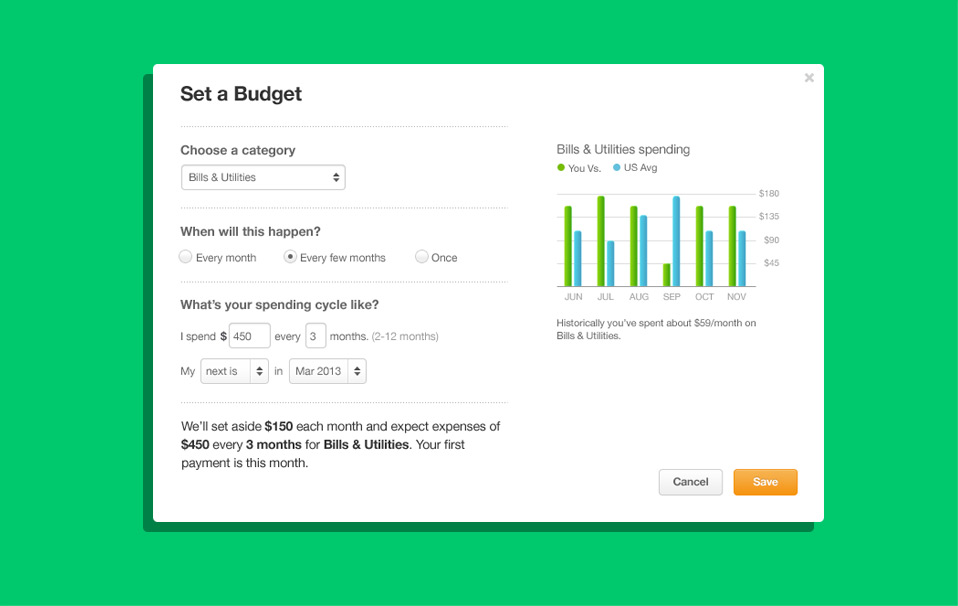
It doesn't matter how you track expenses, even if you just keep a running tab in your head. As long as it helps you stick to your budget and works for your family, go for it! We love Mint for tracking expenses, and we can use it at home or on the go. Try out a few different apps if you aren't sure, most of them are free.
Some tips for sticking to a budget:
* When you get paid, immediately pay any bills that are due. If you go straight to the grocery store, decide to wait until Monday to pay bills, or go buy that new gadget you wanted, you will be less likely to get everything paid on time and on budget.
* Decide before payday, preferably before the month begins, what each paycheck will go to. We know rent will require more than one paycheck, so we must plan to save some from the prior check. We know utilities are due mid-month, so that paycheck pays all those bills. This leaves the second week's paycheck for groceries, savings, rollover accounts, and insurance.
* Have written goals not just for savings or debt payoff, but for big ticket items you want to buy. We needed a new computer, but our toy fund wasn't enough to cover it, and all the required accessories for setup. So we wrote out a plan to take $10 off our "fun" budget each week to put in the toy fund. We agreed on the computer specs we needed, a budget for the entire purchase, and a time frame to get it done. When it came time to purchase it, not only did we have the funds, but we knew exactly what we needed and wanted and could shop around a bit for sales and get the best deal. We did the same thing with our vehicle purchase, and really anything over $100 we need.
* Set a limit on purchases you can decide on alone. We have agreed that anything over $100 must be decided on and agreed upon together, in advance. No splurging on big ticket items keeps our spending under control. In our earlier years of marriage, the limit was $20. Find a limit that works for you and your budget.
* Never pay full price if you can avoid it. Shop sales, search for coupons, wait for Black Friday or tax time deals on big purchases. Before you go grocery shopping, print out coupons or download them to your store's shopper rewards card. Just spending a few minutes online adding coupons to my Kroger Plus card saves me about $20 a week on groceries. That's $80-100 every month for browsing online! Check out my other tips on saving money on groceries.
* If it can wait, let it wait. This obviously doesn't apply to everything, but some things can be put off. We really need a couple beach towels for vacation, but this week's budget was already tight. We decided we could work it into next week's budget and give ourselves a little breathing room. If we tapped our entire vacation fun with this week's check, we'd be too tight in other areas.
* Think long term as well as short term. We budget for the entire month. But we also further break that down into weekly budgets, and extend it out for 3 to 6 months so we can better plan for the future. We have a goal of buying a house next year, so we have to plan long term savings. But if we neglect to budget each week's paycheck, we would either blow too much and get behind on bills, or pay all the bills with one check and have nothing left for food or gas. If you get paid every two weeks, budget for every two weeks if that makes it easier. We get paid every week from employment, and once a month from disability. We factor both into our monthly budget, but we ignore the disability for most of the month as we use it solely to pay rent. It even stays in a different account.
* Use multiple accounts if it makes life easier. Once you've opened up one bank account, the hard part is over. Opening a second account typically doesn't require getting all that information again (assuming you stick with the same bank). We only had to sign a piece of paper to open our 2nd, 3rd, and 4th accounts with our main bank. Now we have different accounts for bills, savings, hubby's allowance, and rent. This is too complicated for some people, but if it would make life easier to keep rent money separate for the month and just set up automatic transfers for it- then do it!
* Keep track SOMEHOW. Write it down, save receipts, download an app (there's hundreds available!), track it on a computer, print off a spreadsheet and put it on the fridge. Just do something to track your goals, progress, and spending for the month.
*Set up budget meetings. You can choose to do weekly, bi-weekly, or monthly. But set aside a time to sit down with your partner, go over the budget and any upcoming expenses. This is a great time to check in with goal progress and plan major expenses.
* Challenge each other. See who can spend the least this month, the winner gets a special prize. See who can go the longest without buying ANYTHING. This obviously wouldn't include bills, but you'd be amazed what you can live without, especially if you get to gloat to your partner. (Again, maybe that's just me)
* House shop before retail shopping. When I'm on an organizing spree and looking for something for a specific job, I first shop around the house. Can I reuse something in the garage? Could that old box in the attic be a secret treasure? Look for things around the house you could use instead of buying something new. If you must buy something, check thrift stores and consignment shops before paying full price.
* Above all, realize that budgets are ever-changing. You will never have the perfect budget. Food prices go up, income fluctuates, and expenses change over time. You have to be flexible. This is where budget meetings come in handy - you can discuss the changes and the best way to handle them. Re-evaluate your budget every few months to make sure it lines up with your actual expenses.
* And finally, don't get up. If you fall off the wagon or get off track, just hop back on! You'd be amazed at the peace that comes with being able to pay everything and still have money leftover for fun things. It's never too late to start or get back on track.
Tuesday, June 30, 2015
Budgets Part 2: Creating A Realistic Budget
Once you have finished Part 1: Calculating Expenses, you can move on to creating a realistic budget.
Look at all your expenses. Start with what can't be changed - your rent / mortgage, debt payments, student loans, childcare costs, etc. Write down all your fixed expenses and tally them up. How much do you have left to work with?
Now look at semi-fixed expenses - utilities may vary a bit, but are they generally about the same each month? Phone, internet, cable, insurance - things that could be lowered just a bit. Can you get on a steady payment plan with your electric company where you pay an average (fixed) amount each month? Can your cell phone plan be changed to lower your bill? Do you really watch all those channels, or can you reduce your cable package? When was the last time you checked your insurance rates? Simply making a few phone calls or checking around online can reduce these expenses quite a bit.
Now comes the harder expenses. First, we will look at monthly variable expenses, then we'll explore those not-so-regular expenses, like gifts, that still come up, just not every month.
Monthly expenses. Food is often the biggest surprise when starting a budget. It's easy to spend more than expected at the grocery store, go out to eat a little more than planned, make those unexpected trips to the market and end up with a few extra things. Really analyze how much you spend in this category. Can you reduce how often you eat out? Can you buy less convenience foods? Could you plan out your meals better and buy only what you need? There are countless ways to save on groceries, from sales to coupons to meal planning. Set a reasonable goal and try to reduce it a bit each week. If you try to drastically change it all at once, you will surely fail. Start by trimming down $50 or even $25 each week and work your way up. Consider your schedule when doing this. If you know you have back to back soccer games on Saturdays or you always eat with the family after church, include that in your budget and planning. Food may be one of the most challenging areas, but it's also one of the easiest places to shave off a few dollars.
Other monthly expenses you could cut back on with little effort are fuel (plan your trips better, carpool, etc), babysitting (reduce how often you go out alone or consider taking the kids with you), entertainment (look for cheaper alternatives, have a movie night at home, check for coupons), and personal hygiene / grooming ( go a week longer between haircuts, try an at-home trim or dye, use coupons for products you buy regularly, make your own products at home). There are countless ways to trim a few dollars here and there, which can make a big difference overall.
Now for those irregular but inevitable expenses. Consider how much you spend at Christmas time (and how broke you are in January!). What if instead you put aside $25 every month, so when December rolls around you already have the cash. And if you set aside $20 every month for other gifts (and let it roll over each month it's not used), then Mother's Day, Father's Day, Valentine's Day, Easter, Anniversaries, and Birthdays won't be so hard on your budget. Car repairs and maintenance- you know you're going to need it, why not plan for it? If you budgeted for $30 a month for car maintenance, then when you need that new wiper blade, oil change, or brakes, you've already got the cash. The key here is to plan. You know they will eventually happen, even if it's not every month. Look at your expense list again, and pick out all the irregular expenses (clothing, gifts, repairs, home maintenance, school supplies, club dues, sporting equipment and fees, etc). You can combine some or keep them all separate and give them a line in the budget each month.
If you set up a Mint account in Part 1, it will help you with this part. You can create a budget category for every expense, and it gives you the option to rollover any unused portion - like for gifts and maintenance. Then you can easily see at any time how much you've spent in each category.
Go line by line and see if you can reduce each expense, even if it is only by a few dollars. Remember, every little bit helps and they can add up to a big difference. Make sure every expense you listed has a place in the budget, and make sure it is realistic for your family. If you've been spending $300 a month eating out, cutting it out completely won't work. Reduce it to $150, then when you are comfortable with that, cut back a little more. Every budget is a work in process and it's okay to tweak it each month. Be sure to include savings in your budget - both long and short term (eg: retirement and emergency fund), so life's little mishaps don't catch you off guard.
In Part 3 we will go over how to stick to the budget. Right now, just focus on creating a budget that works for you. No two budgets will be alike, you have to figure out what works best for your family. If you have athletic children, you'll probably spend more on sports equipment. If you are an artsy family, craft supplies may be a larger expense. The main points to remember are to account for every expense, and reduce everything you can.
Look at all your expenses. Start with what can't be changed - your rent / mortgage, debt payments, student loans, childcare costs, etc. Write down all your fixed expenses and tally them up. How much do you have left to work with?
Now look at semi-fixed expenses - utilities may vary a bit, but are they generally about the same each month? Phone, internet, cable, insurance - things that could be lowered just a bit. Can you get on a steady payment plan with your electric company where you pay an average (fixed) amount each month? Can your cell phone plan be changed to lower your bill? Do you really watch all those channels, or can you reduce your cable package? When was the last time you checked your insurance rates? Simply making a few phone calls or checking around online can reduce these expenses quite a bit.
Now comes the harder expenses. First, we will look at monthly variable expenses, then we'll explore those not-so-regular expenses, like gifts, that still come up, just not every month.
Monthly expenses. Food is often the biggest surprise when starting a budget. It's easy to spend more than expected at the grocery store, go out to eat a little more than planned, make those unexpected trips to the market and end up with a few extra things. Really analyze how much you spend in this category. Can you reduce how often you eat out? Can you buy less convenience foods? Could you plan out your meals better and buy only what you need? There are countless ways to save on groceries, from sales to coupons to meal planning. Set a reasonable goal and try to reduce it a bit each week. If you try to drastically change it all at once, you will surely fail. Start by trimming down $50 or even $25 each week and work your way up. Consider your schedule when doing this. If you know you have back to back soccer games on Saturdays or you always eat with the family after church, include that in your budget and planning. Food may be one of the most challenging areas, but it's also one of the easiest places to shave off a few dollars.
Other monthly expenses you could cut back on with little effort are fuel (plan your trips better, carpool, etc), babysitting (reduce how often you go out alone or consider taking the kids with you), entertainment (look for cheaper alternatives, have a movie night at home, check for coupons), and personal hygiene / grooming ( go a week longer between haircuts, try an at-home trim or dye, use coupons for products you buy regularly, make your own products at home). There are countless ways to trim a few dollars here and there, which can make a big difference overall.
Now for those irregular but inevitable expenses. Consider how much you spend at Christmas time (and how broke you are in January!). What if instead you put aside $25 every month, so when December rolls around you already have the cash. And if you set aside $20 every month for other gifts (and let it roll over each month it's not used), then Mother's Day, Father's Day, Valentine's Day, Easter, Anniversaries, and Birthdays won't be so hard on your budget. Car repairs and maintenance- you know you're going to need it, why not plan for it? If you budgeted for $30 a month for car maintenance, then when you need that new wiper blade, oil change, or brakes, you've already got the cash. The key here is to plan. You know they will eventually happen, even if it's not every month. Look at your expense list again, and pick out all the irregular expenses (clothing, gifts, repairs, home maintenance, school supplies, club dues, sporting equipment and fees, etc). You can combine some or keep them all separate and give them a line in the budget each month.
If you set up a Mint account in Part 1, it will help you with this part. You can create a budget category for every expense, and it gives you the option to rollover any unused portion - like for gifts and maintenance. Then you can easily see at any time how much you've spent in each category.
Go line by line and see if you can reduce each expense, even if it is only by a few dollars. Remember, every little bit helps and they can add up to a big difference. Make sure every expense you listed has a place in the budget, and make sure it is realistic for your family. If you've been spending $300 a month eating out, cutting it out completely won't work. Reduce it to $150, then when you are comfortable with that, cut back a little more. Every budget is a work in process and it's okay to tweak it each month. Be sure to include savings in your budget - both long and short term (eg: retirement and emergency fund), so life's little mishaps don't catch you off guard.
In Part 3 we will go over how to stick to the budget. Right now, just focus on creating a budget that works for you. No two budgets will be alike, you have to figure out what works best for your family. If you have athletic children, you'll probably spend more on sports equipment. If you are an artsy family, craft supplies may be a larger expense. The main points to remember are to account for every expense, and reduce everything you can.
Monday, June 29, 2015
Budgets Part 1: Calculating Expenses
I am about to get really personal with you. Budgets tend to be a taboo subject, but they shouldn't be. Perhaps if we were all more open to talking about budgets and finances, people wouldn't be in so much debt.
I'm going to show you my method of creating a budget, and tips for sticking to it.
The first step- write it all down! Not just bills that you pay every month, but every expense you have. Don't worry about numbers right now, just write down everything you spend money on during the month. For example:
Rent / Mortgage
Homeowners / Renters Insurance
Electricity
Water
Sewer
Gas
Cable
Internet
Cell Phone
Car Payment
Car Insurance
Health Insurance
Groceries
Eating Out
Credit Card Payments
Childcare
Babysitters
Children's Allowance
Church Tithings / Offerings
Cigarettes
Alcohol
School Supplies
Clothing
Household Items
Laundry Expenses
Home Maintenance
Retirement Accounts
College Savings
Student Loans
Shopping
Children's Needs
Haircuts
Personal Hygiene / Grooming
Pet Expenses
Emergency Savings
Entertainment
Club Dues
School Expenses
Gifts
Charity / Donations
If you've spent money on it in the last 90 days, write it down. I'm sure you will forget something, and that's okay. This is just a starting point.
Next Step- List your net income. If you have a variable income, take an average of the last three months and use that. We will discuss later how to handle a budget with variable income.
Now comes the fun part- finding out how much you really spend on each item. Most people are genuinely surprised by the results and grossly underestimate how much they spend every month. There are a few ways to do this. You can go back through bank and credit card statements for the past 90 days and write down / tally each expense. This can be cumbersome if you have multiple accounts, but is the best way to get an accurate total. If you would like a slightly simpler approach, I suggest using Mint. You can use it from your computer or download the app to any smart phone or tablet. I use the website when I'm at home, but have the app on my tablet for when I'm out and want to track a purchase. The first time you use it will take a few extra minutes as you set it up, but it is well worth the time and energy. I have used Mint for years and it is the best budget tool for starting out and staying on track. You will set up your account, and link all your bank and credit card accounts. I promise, it's secure, and you don't have to type in all the account numbers. Mint will automatically track and categorize every purchase you make. You can set up budgets, savings goals, and track debt payoff too. For now, you just want to track your expenses.
Feeling nervous? Realizing how much you actually spent on food last month? It can be very eye-opening to see everything in one place, but you can't fix a problem if you don't know what it is.
Now you need to combine everything. You can use a spreadsheet, computer program, or good ole pen and paper. I prefer to write it all out by hand, it ensures I don't miss anything and really makes it sink in. Take your list of expenses you created earlier, and add the amount spent. If you find an expense you forgot about, just add it to the list. Be honest with yourself, or this will never work. Don't try to fudge the numbers, don't brush it off as "a one time expense"- if you spent money on it, write it down. This budget is just between you and your partner, there is no need to lie or be embarrassed. I can't guarantee an argument won't ensue over how much you spent on groceries or how much he ate out at work last week. But I can promise you it will all be worth it in the end.
Tally up all your income, and deduct all your expenses. Are you in the hole, just barely breaking even, or are you the rare bird with plenty of money left at the end of the month? Did you rely on credit cards to make purchases? Right now we are only focused on getting everything out in the open- don't stress over how to fix it just yet. Knowledge is power, and you need to know everything before you can move on. Take some time to get everything together, include every expense, and talk with your partner about it. If there were cash withdrawals, be sure to account for where that money went as well. Once you have everything ready, you can move on to setting up a realistic budget.
Part 2: Setting Up A Realistic Budget
Wednesday, December 5, 2012
Family Finances
Managing your family's finances can be a tough job. You have to know how much you make, how much you can spend, when and how to pay bills, and manage to save for a rainy day. But it's not as daunting as it may seem. Here's a quick financial plan for you, to help manage your finances better and keep your family afloat.
1. Create a budget. The simplest thing, yet most people never do it. Of those who do attempt a budget, it is rarely a COMPLETE budget. A budget is not a list of bills you pay every month. A budget is not a list of things you want to buy come payday. A budget is a blueprint for all of your finances. It should contain ALL expense, not just bills. Here is an example to help you get started. This worksheet is also included in the Household Notebook post.
2. Stick to the budget. This is the hard part. If your budget is not realistic, you will never stick to it. If you find you have trouble sticking to your budget, move to a cash-envelope system, in which you use cash for things like food, clothing, and all non-necessity bills. It's harder to hand over cash, and with a finite amount of cash in hand, you will closely watch your purchases.
3. Save, save, save! You have to be prepared for the future. You should have savings set aside for home repairs, car maintenance, new car purchase, clothing, and other big ticket expense (like Christmas shopping or a new baby). If you aren't prepared for big expenses, you will rely on credit and debt, starting a cycle of dependency. Save for purchases, save for the future.
4. Avoid debt. Pay in cash whenever possible. You will save hundreds and thousands of dollars in interest, avoid payments that can last for years, and actually OWN your stuff. When you finance a car, you don't own it, the finance company does. Should you stop making payments, they will take their car back. If you had paid cash for the car, there is no monthly payment or threat of having it repossessed. Start a savings fund for anything you plan to purchase that is considered "big ticket" in your household. This will vary depending on income level. Instead of going to a rent-to-own place or financing your new couch, make the payment to yourself for a few months and save up to pay in cash. This will reduce your monthly expenses, and should a major emergency come up, you'll be glad you have that $500 in savings instead of a nice leather sofa-and its payment.
5. Plan ahead. Invest, start a college fund for your child, add money to a retirement account, or funnel extra cash to your mortgage payment. The more you plan and prepare now, the less shocked, and broke, you will be in the future.
6. Seek help. If you or your spouse have a spending problem, too much debt, not enough income, or you'd just like to better manage your finances, seek help. Dave Ramsey is an excellent teacher, Suze Orman can show you a few things, and Robert Kiyosaki has several books out. You don't have to spend tons of money on a financial adviser, you can get free help right from your computer.
Once you have a working budget, then we can work to reduce your expenses. There are tons of ways to reduce your spending on everyday things like food, clothing, gifts, cell phone plans, utilities, and so much more! We'll explore these later, and help you get a handle on your family finances.
1. Create a budget. The simplest thing, yet most people never do it. Of those who do attempt a budget, it is rarely a COMPLETE budget. A budget is not a list of bills you pay every month. A budget is not a list of things you want to buy come payday. A budget is a blueprint for all of your finances. It should contain ALL expense, not just bills. Here is an example to help you get started. This worksheet is also included in the Household Notebook post.
2. Stick to the budget. This is the hard part. If your budget is not realistic, you will never stick to it. If you find you have trouble sticking to your budget, move to a cash-envelope system, in which you use cash for things like food, clothing, and all non-necessity bills. It's harder to hand over cash, and with a finite amount of cash in hand, you will closely watch your purchases.
3. Save, save, save! You have to be prepared for the future. You should have savings set aside for home repairs, car maintenance, new car purchase, clothing, and other big ticket expense (like Christmas shopping or a new baby). If you aren't prepared for big expenses, you will rely on credit and debt, starting a cycle of dependency. Save for purchases, save for the future.
4. Avoid debt. Pay in cash whenever possible. You will save hundreds and thousands of dollars in interest, avoid payments that can last for years, and actually OWN your stuff. When you finance a car, you don't own it, the finance company does. Should you stop making payments, they will take their car back. If you had paid cash for the car, there is no monthly payment or threat of having it repossessed. Start a savings fund for anything you plan to purchase that is considered "big ticket" in your household. This will vary depending on income level. Instead of going to a rent-to-own place or financing your new couch, make the payment to yourself for a few months and save up to pay in cash. This will reduce your monthly expenses, and should a major emergency come up, you'll be glad you have that $500 in savings instead of a nice leather sofa-and its payment.
5. Plan ahead. Invest, start a college fund for your child, add money to a retirement account, or funnel extra cash to your mortgage payment. The more you plan and prepare now, the less shocked, and broke, you will be in the future.
6. Seek help. If you or your spouse have a spending problem, too much debt, not enough income, or you'd just like to better manage your finances, seek help. Dave Ramsey is an excellent teacher, Suze Orman can show you a few things, and Robert Kiyosaki has several books out. You don't have to spend tons of money on a financial adviser, you can get free help right from your computer.
Once you have a working budget, then we can work to reduce your expenses. There are tons of ways to reduce your spending on everyday things like food, clothing, gifts, cell phone plans, utilities, and so much more! We'll explore these later, and help you get a handle on your family finances.
Subscribe to:
Posts (Atom)